
Evaluating the Impact of Smoking on Lung Cancer Risk Using Data Analytics

Introduction
Lung cancer remains one of the leading causes of mortality worldwide. Understanding the contributing factors is essential for early detection and prevention. In this project, we used data analytics to explore how smoking and other lifestyle factors influence lung cancer risk.
Methodology
The dataset consisted of patient-level information, including demographics, symptoms, and co-risk factors such as alcohol consumption and anxiety. Data transformation was performed using Power Query, while DAX was used to calculate key metrics.
Key Findings
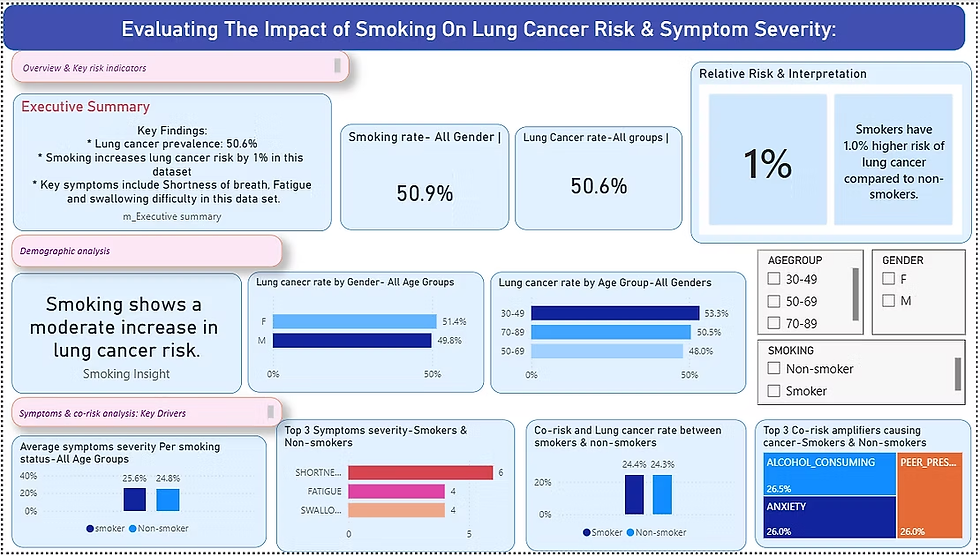
The analysis revealed that smoking significantly increases lung cancer risk. Additionally, co-risk factors such as alcohol consumption and anxiety further amplify this risk. Certain demographic groups also showed higher prevalence rates.
Insights
By leveraging interactive dashboards, stakeholders can explore how different variables influence outcomes. This enables more targeted and informed decision-making.
Recommendations
Implement targeted screening programs for high-risk individuals
Focus on early detection through symptom monitoring
Increase public awareness campaigns
Conclusion
Data analytics plays a critical role in uncovering patterns and supporting evidence-based healthcare decisions. This project demonstrates how data can be transformed into actionable insights for improved outcomes.
visit:


Comments